Posts

Showing posts with the label constructive criticism

Giving Feedback and Criticism to Students that is Constructive and Growth-Promoting
Image
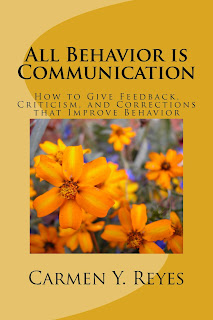
Teacher Training > How-To Guide An out-of-a-kind resource in student discipline! All Behavior is Communication: How to Give Feedback, Criticism, and Corrections that Improve Behavior is an education and teaching book by Carmen Y. Reyes, The Psycho-Educational Teacher . The topic of this innovative guide is simple yet powerful: what teachers say to children (the words we use) influence the way students perform. Feedback and criticism that convey high and positive expectations influence positive performance, but feedback and criticism that constantly remind children of their low performance and/or recurrent behavior problems reinforce the same low performance and behavior problems that we want to extinguish in the first place. Teachers make the difference, that is how powerful our words and messages are. Therefore, if we want to change children’s disruptive and/or apathetic classroom behavior a first step would be to monitor, and if necessary change, the messages we sen...

Do Kids Need Positive Thinking?

Image
Like adults, children are not immune to the stressors of life. In managing personal and academic challenges, kids quite often experience frustration, expressing high concern and self-doubt with remarks such as: I can’t do anything right. I messed up again. I’m so stupid. I’m a failure if I can’t do this. Nothing works out for me. I’m going to do awful. I know I’m going to fail this test. The other kids think I’m weird. Everybody makes fun of me. I know something bad is going to happen. Most children seem unaware of this pattern of negative thinking, missing the important connection between repetitive and pessimistic self-talking (negative thoughts) and a low self-confidence with high anxiety. Like with the rest of us, these kinds of negative judgments or beliefs put us down; we criticize ourselves harshly for common errors and mistakes, doubt of our skills and abilities, and anticipate only the worst. With children specifically, negative and pessimistic thinking stron...

Contributing Factors to the Escalation of Behavior Problems

Image
In the psycho-educational field we firmly believe that adult behavior strongly influences child behavior, often creating an emotional atmosphere that is more conducive to noncompliance than to compliance. More specifically, what we say to children and how we say it can either accentuate or de-escalate a behavior problem. Caregivers need to be vigilant of those communicative (i.e. messages) and interactional (e.g. strained adult-child interactions) factors that may inadvertently fuel inappropriate behaviors in children. Next, I share some insights of things we say to children that may be contributing to disruptive behavior at school and at home. Among them, we can find: ·         Creating on-the-spot penalties for misbehavior rather than developing and discussing consequences for negative behavior with children before problem behaviors happen. Children need to know the consequences for misbehavior in advance. ·      ...

Secret Teacher: low morale and high pressure leaves no time for inspiration | Teacher Network | Guardian Professional

To read article, click on this link: Secret Teacher: low morale and high pressure leaves no time for inspiration | Teacher Network | Guardian Professional NEW! Free or Cheap Books, Worksheets and Lesson Plans for Teachers Finding all kinds of FREE or cheap resources for teachers – Including books, guides, articles, worksheets, checklists, rubrics, lesson plans, and plenty more! Like our FACEBOOK PAGE here to start receiving these unique teaching resources.

Giving Criticism that Helps, Not Hurt / Behavior Advisor

To read this article, click on link: Offering effective criticism to children and youth NEW! Free or Cheap Books, Worksheets and Lesson Plans for Teachers Finding all kinds of FREE or cheap resources for teachers – Including books, guides, articles, worksheets, checklists, rubrics, activities, projects, lesson plans, and plenty more! Like our FACEBOOK PAGE here to start receiving these unique teaching resources.

Praise that Works with Praise Resistant Kids / Behavior Advisor

To read this article, click on link: Praise that works with praise resistant kids A Call to All Teachers: Proudly announcing our new group for educators worldwide, “ We Teach the World .” Our aim is to connect teachers and related school personnel all over the world, so that we can share much-needed ideas, strategies, and lesson plans as well as all kinds of resources in classroom management and in student discipline. Coordinating our effort worldwide, we can tell each other where to find important resources and information. If you administer a teaching blog or have created educational resources to facilitate our job, you are welcome to share them here. As long as they contribute to education, we want to know of your business. Teachers with questions, post them here; mentors and seasoned teachers, your valuable experience and unique perspective matter to us, so make your voices heard. Because isolated, we teachers are imaginative, resourceful and resilient, but connected, co...

Give Students Honest Feedback - Walt Gardner's Reality Check / Education Week

Give Students Honest Feedback - Walt Gardner's Reality Check - Education Week

Carol Dweck's Attitude: It's Not About How Smart You Are / The Chronicle Review

Carol Dweck's Attitude - The Chronicle Review - The Chronicle of Higher Education

Giving Feedback to Students: Choice Words / Instructional Leader

Instructional Leader

Giving Feedback to Students: First Words

First Words

Giving Criticism Effectively | Learner Centered Teaching

Giving Criticism Effectively | Learner Centered Teaching

Teaching Students to Accept Criticism/Teachingcom

Teaching Students to Accept Criticism - Teachingcom

HOW TO GIVE EFFECTIVE FEEDBACK TO STUDENTS / Krstovic's Thoughts on Education

Krstovic's Thoughts on Education - HOW TO GIVE EFFECTIVE FEEDBACK TO OUR STUDENTS